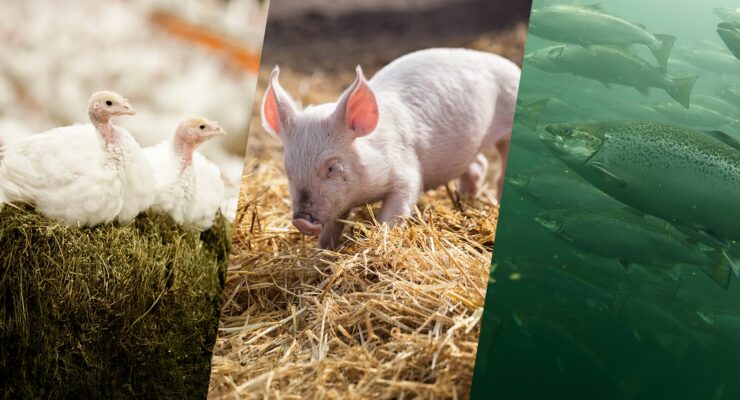
For many Australians buying ethical seafood is important, and there are lots of factors to consider. You might think about the impact on the environment, wild stock levels and by-catch but did you know that fish are also farmed? Known as aquaculture, it is described by the United Nations as one of the fastest-growing animal protein production sectors in the world. What’s good for consumers who care about animal welfare though, is the opportunity to choose fish that have been farmed with a focus on better welfare.
Science shows that fish can experience pain and suffering. This means that, just like other animals farmed for food, animal welfare should be a priority for fish farmers and supported by Australians when they’re shopping for seafood.
What to look for when choosing salmon
If you’re buying salmon in Australia, you may see different descriptors on the labels: wild caught, responsibly sourced, Alaskan, Tasmanian … but for animal welfare there’s one label that’s going to give you assurance that fish have been well cared for and had a humane death. That’s the RSPCA Approved logo. Here’s why.
RSPCA Approved means a focus on welfare
The RSPCA Approved Farming Scheme has detailed animal welfare standards for farmed Atlantic salmon. These standards have been developed by considering the animal welfare science, RSPCA policy, and Australian-specific farming practices. They focus on ensuring better farming practices, fish handling, husbandry, and management.
Salmon are anadromous which means they can live in both fresh and salt water. Farmed salmon are grown for 3 years, and they’ll spend roughly half of that time in freshwater tanks on land and the other half in marine pens out in the ocean.
Throughout their life onshore and when released offshore, RSPCA Approved salmon farms focus on providing for the fish’s behavioural and physical needs. This includes ensuring there’s enough space for them to swim effortlessly in oxygen-rich water and to be able to perform natural schooling behaviours with other fish. All handling is done in a low stress way, and stunning at slaughter ensures a humane death. This is so important, as traditional methods of killing fish can include asphyxiation (suffocation by taking them out of water), exposure to very low temperatures (e.g. placing them on ice) or bleeding out without stunning.
To ensure the RSPCA’s standards are being met, RSPCA Approved farms are regularly assessed. This includes visits to the location where fish are bred right through to where they are slaughtered.